Beneath the Scorching Sun: The Summer of Invisible Workers Between Record Heat and Denied Rights
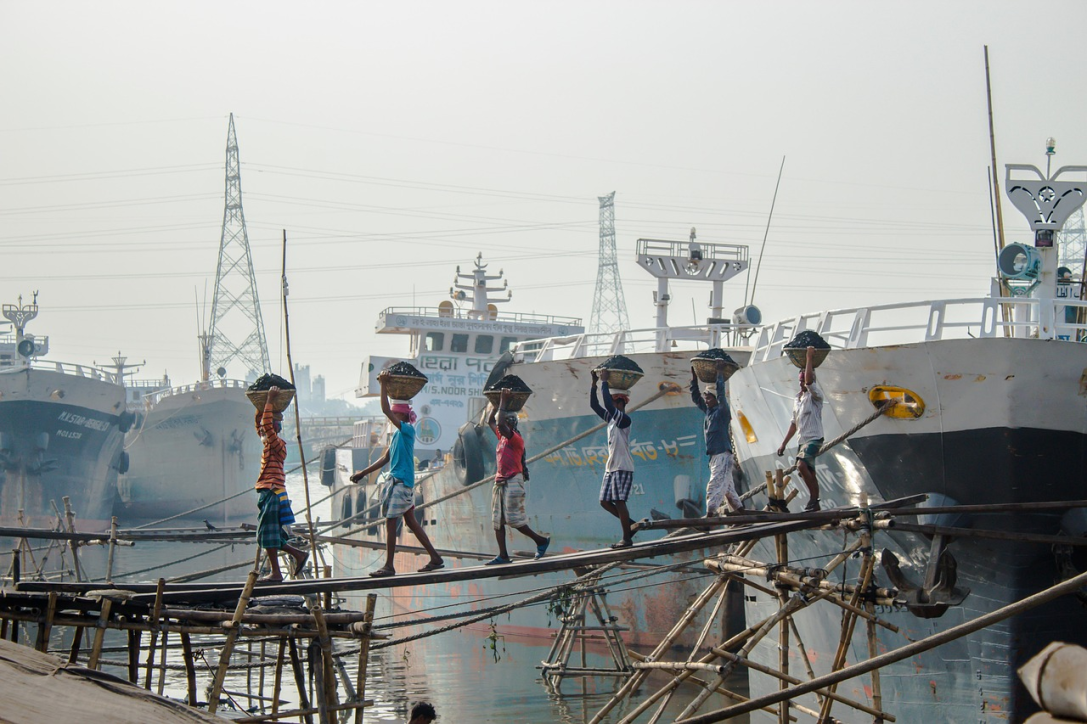
The Year of Fire
The year 2026 is going down in history as one of the hottest ever recorded. Heatwaves follow one another relentlessly, nighttime temperatures remain above 25°C, and thermometers in many cities easily exceed 40°C in the shade. While many can retreat to air-conditioned offices or take a break by the sea, there is a silent army of workers who do not have that luxury. They are construction workers, delivery drivers, couriers, agricultural laborers, street cleaners, mechanics, bakers, and anyone working outdoors or in non-air-conditioned environments. For them, heat is not a seasonal annoyance but a potentially lethal working condition.
This article is dedicated to them. To those who wake up at dawn to beat the sun, to those who wear heavy protective suits under an unforgiving sky, to those who deliver parcels and food while the asphalt melts, to those who harvest fruits and vegetables in greenhouse ovens. It is a story of endurance, of exhaustion, but also of a silent battle for the recognition of fundamental rights: the right to health, safety, and a decent wage under extreme conditions.
The Physical Toll of Extreme Heat
Working in high temperatures is not merely uncomfortable; it is a direct assault on the human body's homeostasis. Our organism is designed to function within a narrow range of internal temperatures, around 37°C. When the external temperature exceeds 35°C, the body begins to struggle to dissipate heat. The primary mechanism is sweating, but in humid environments or without ventilation, sweat does not evaporate, and the body does not cool down.
The symptoms of heatstroke are insidious: they begin with muscle cramps, nausea, and dizziness. If left unaddressed, this progresses to heat exhaustion, characterized by confusion, tachycardia, and dry, red skin. The next stage is full-blown heatstroke, a medical emergency that can cause permanent brain damage and even death. For a worker who must maintain a productive pace, stopping is often a luxury they cannot afford. Pressure from supervisors, fear of losing their job, or the sheer need to earn a living wage push many to ignore their body’s warning signs.
The Social Injustice of Heat
Heat, like many other climate crises, is not democratic. It disproportionately impacts the most vulnerable. Those who can afford it stay indoors, but those working on construction sites, on the streets, and in the fields are often the lowest-paid, the least protected, and those living in degraded suburbs where the "urban heat island" effect amplifies temperatures.
According to the International Labour Organization (ILO), by 2030, productivity losses due to heat stress will cost the global economy over $2.4 trillion, with developing countries paying the highest price. But beyond macroeconomic numbers, there is individual suffering. The farmer losing crops to drought yet still working hours under the sun. The courier cycling miles with a perceived temperature of 50°C. The worker welding metal in a windowless warehouse where the air is unbreathable.
These workers are the backbone of our society, yet they are often invisible. When they return home, exhausted, they rarely make the news, except as statistics. But this year, something is changing: the frequency and intensity of heatwaves are making silence unsustainable.
Protection Measures: What Does the Law Say?
In Italy, Legislative Decree 81/2008 (the Consolidated Law on Workplace Safety) requires employers to assess all health risks for workers, including microclimatic ones. However, in practice, the assessment of heat stress risk is often neglected or addressed with generic solutions. There is no law mandating an automatic stop to work when temperatures exceed a certain threshold, as is the case in some countries like Spain, which recently introduced a ban on outdoor work during red alert heatwaves.
Trade unions and occupational health experts have long called for stricter protocols. Among the most effective measures are:
Schedule reorganization: performing the heaviest tasks during cooler hours (dawn and late afternoon) and providing mandatory breaks during the central hours of the day.
Access to drinking water: a simple tap is not enough; there must be frequent refreshment points and the possibility to drink freely without fear of reprisals.
Adequate clothing and PPE: helmets and suits that are not ovens, breathable technical fabrics, and sun protection.
Specific training: teaching workers to recognize the symptoms of heatstroke and to intervene promptly.
The “Presenteeism” Syndrome: Working at All Costs
One of the most dramatic aspects of this situation is the “sick presenteeism” syndrome. Often, workers continue to show up even when they are unwell, for fear of losing a day's pay or being seen as "weak." In construction and agriculture, where piecework or low hourly wages incentivize maximizing hours, stopping at midday for rest means losing part of one's income. It's a cruel calculation: risking one's life to put bread on the table. But this year’s record temperatures are breaking even the most stoic resistance. Cases of workplace collapse are on the rise, and news reports increasingly feature stories of workers collapsing under the sun.
The Role of Companies and Social Responsibility
Not all companies are the same. Some virtuous businesses are investing in innovative solutions to protect their employees: cooling vests, ventilated helmets, extended lunch breaks, and even apps that monitor health status in real time. These companies understand that productivity cannot be separated from safety. An overheated worker makes more mistakes, reacts more slowly, and is more prone to accidents. Investing in safety is not only a legal obligation but a competitive advantage.
Unfortunately, a toxic work culture still exists that celebrates “doing more” and “enduring” as absolute values. On many construction sites, stopping due to heat is seen as a weakness, a luxury for the “lazy.” This narrative must change radically.
International Examples: What’s Happening in Europe and the World
While Italy is still debating, other countries are taking concrete measures. In Spain, as mentioned, the government tightened controls after a series of workplace deaths during the 2023 heatwave. The new regulation prohibits certain outdoor work activities when the meteorological agency issues a red alert. In Greece, construction companies are required to stop work during the hottest hours, while in Germany, employers must ensure office temperatures do not exceed 26°C, and above 35°C, a technical solution or work stoppage is mandatory.
In the United States, the state of California has introduced strict rules for agricultural workers, requiring shade breaks and cool water every two hours. These examples show that action is possible. Political will and union pressure are the key ingredients for change.
Stories from the Frontline
To put a face to this reality, we gathered some testimonies. Marco, 45, a construction worker in Rome, tells us: "This year is hellish. At two in the afternoon, on the roof, the thermometer reads 50°C. The iron burns, and gloves aren't enough. If you ask for a break, you get dirty looks. We pushed a bit with the union and finally got to start at 6 a.m. and stop from noon to 4 p.m. But some still feel guilty about stopping."
Fatima, 32, a bike courier in Milan, adds: "I deliver by bike. The streets are ovens. Customers don't understand why the food is late; they're in the cool and don't know what it's like to pedal in this heat. Restaurant owners don't even offer a glass of water. Sometimes I think of quitting, but then I don't know how I'd pay the rent."
These stories are not exceptions. They are the rule for millions of workers. Their courage is extraordinary, but their endurance should not be taken for granted.
The Fight for a Fairer Summer
Climate change is no longer a future threat; it is our daily reality. Summers will get hotter, and episodes of extreme heat will become more frequent. If we do not act now, the number of workplace fatalities due to heat-related causes will increase exponentially.
The fight for decent work cannot ignore the climate variable. We need a social pact involving government, employers, and unions. This pact must include:
Clear and binding laws: setting temperature limits for outdoor and non-air-conditioned indoor work.
Incentives for companies: tax breaks for those investing in protections, technical clothing, and workplace refurbishment.
More inspections and sanctions: more frequent checks on construction sites and in the fields, with severe fines for violators.
A culture of safety: educating from school onwards about respecting the limits of the human body and not confusing productivity with exploitation.
They Are Not Numbers, They Are People
As you read these words, thousands of people are sweating under a relentless sun. They are not heroes, nor martyrs. They are men and women simply trying to live with dignity. They deserve respect, protection, and the right to say "enough" without fear of losing their jobs. The right to work is sacred, but so is the right to life and health.
This article is a small signal, a gesture of solidarity with all of them. We hope it will remind political decision-makers and society at large that true development is not measured in GDP but in the ability to protect the most vulnerable. The heat will pass, but working conditions and rights must remain.