Why Do We Sleep? The Unsolved Mysteries of Sleep
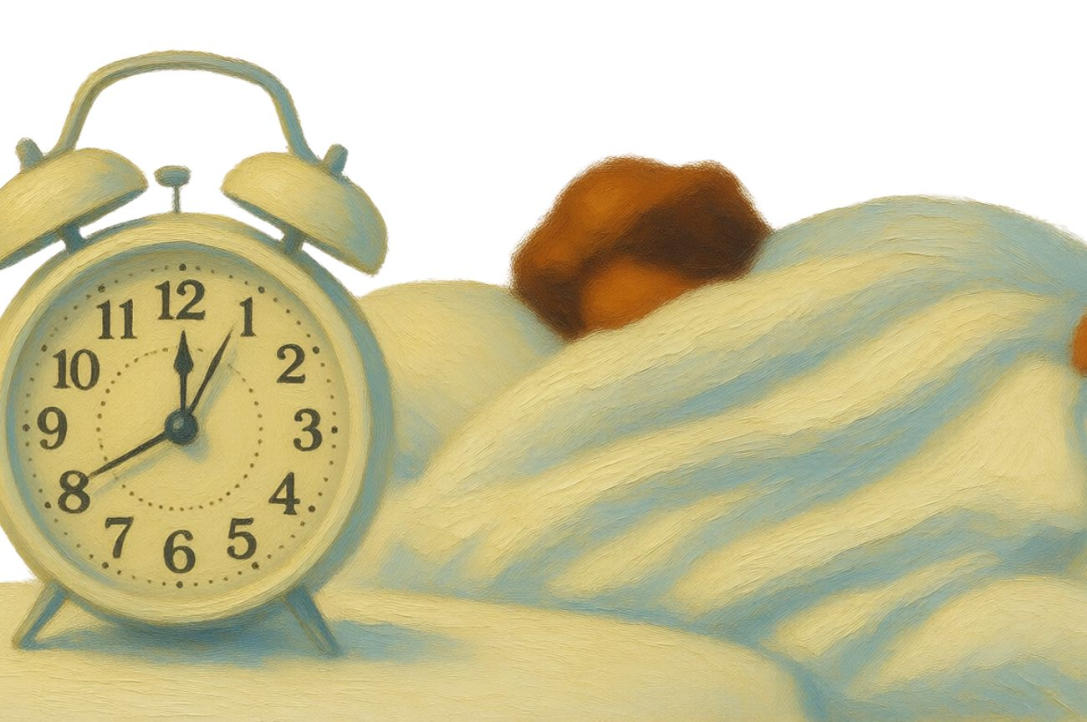
We spend about a third of our lives asleep. When you think about it, it's a risky strategy: for hours we are unconscious, vulnerable, and unproductive. Yet evolution has never gotten rid of it. In fact, from fruit flies to dolphins, practically every animal studied sleeps in some form. If sleep were useless, natural selection would have eliminated it long ago. So what is it for?
Not Every Night Is the Same
Sleep is not a uniform state. During the night, the brain goes through cycles of about 90 minutes, alternating between non-REM sleep, which ranges from light to very deep, and REM sleep (Rapid Eye Movement), the stage of rapid eye movements and the most vivid dreams. In deep sleep, brain waves slow down and become large and synchronized. In REM sleep, on the other hand, brain activity resembles that of wakefulness, while the body remains almost paralyzed.
What We Know (or Think We Know)
Scientists have a few solid hypotheses, which probably aren't mutually exclusive.
Memory. During sleep, the brain seems to "replay" the day's experiences, consolidating the important ones and letting go of the rest. Studies on humans and animals show that those who sleep after learning something remember it better than those who stay awake.
Synaptic maintenance. According to the synaptic homeostasis hypothesis, during wakefulness the connections between neurons are constantly strengthened, and the brain risks becoming saturated. Sleep would serve to scale them back, keeping only the essential ones.
Cleaning. Some research, mostly on mice, suggests that during sleep the cerebrospinal fluid helps remove waste accumulated during the day, including proteins linked to neurodegenerative diseases. The scientific debate on this point is still heated, and not all researchers agree on the extent of the phenomenon.
The Mysteries That Remain
Despite decades of study, none of these theories explains everything. Why can some animals, such as dolphins and migratory birds, sleep with half their brain at a time, while we cannot? Why does sleep duration vary so much between species, from roughly two hours in horses to almost twenty in bats? And why are the effects of extreme sleep deprivation so devastating? In rats it leads to death within weeks, and a very rare genetic disease, fatal familial insomnia, is lethal precisely because it destroys the ability to sleep.
And What About Dreams?
When it comes to dreams, the unknowns are even greater. We know they occur mostly during REM sleep, but we also dream in other stages, in a vaguer form. During dreaming, the prefrontal cortex, the seat of critical reasoning, is less active, which explains why absurdities seem normal while we dream. The visual and emotional areas, such as the amygdala, are instead very active, which may explain the emotional intensity of many dreams.
But why do we dream? There are several hypotheses. For some, dreams help process emotions and integrate memories. For others, they are a kind of "simulator" in which we rehearse reactions to threatening situations. Still others consider them a random by-product of brain activity that our mind tries to turn into a coherent story. Perhaps they are all a little right, or perhaps none of them is.
One Thing Is Certain
That sleep is essential is shown by what happens when we are deprived of it: attention, mood, memory, and immune defenses all suffer. We know less about exactly why, but enough to treat it with respect.
The next time you turn off the light, remember that your brain is about to do something whose purpose science has not yet fully explained. Not bad for an activity we do every single night.