The Society of Ants: A Structured Organization
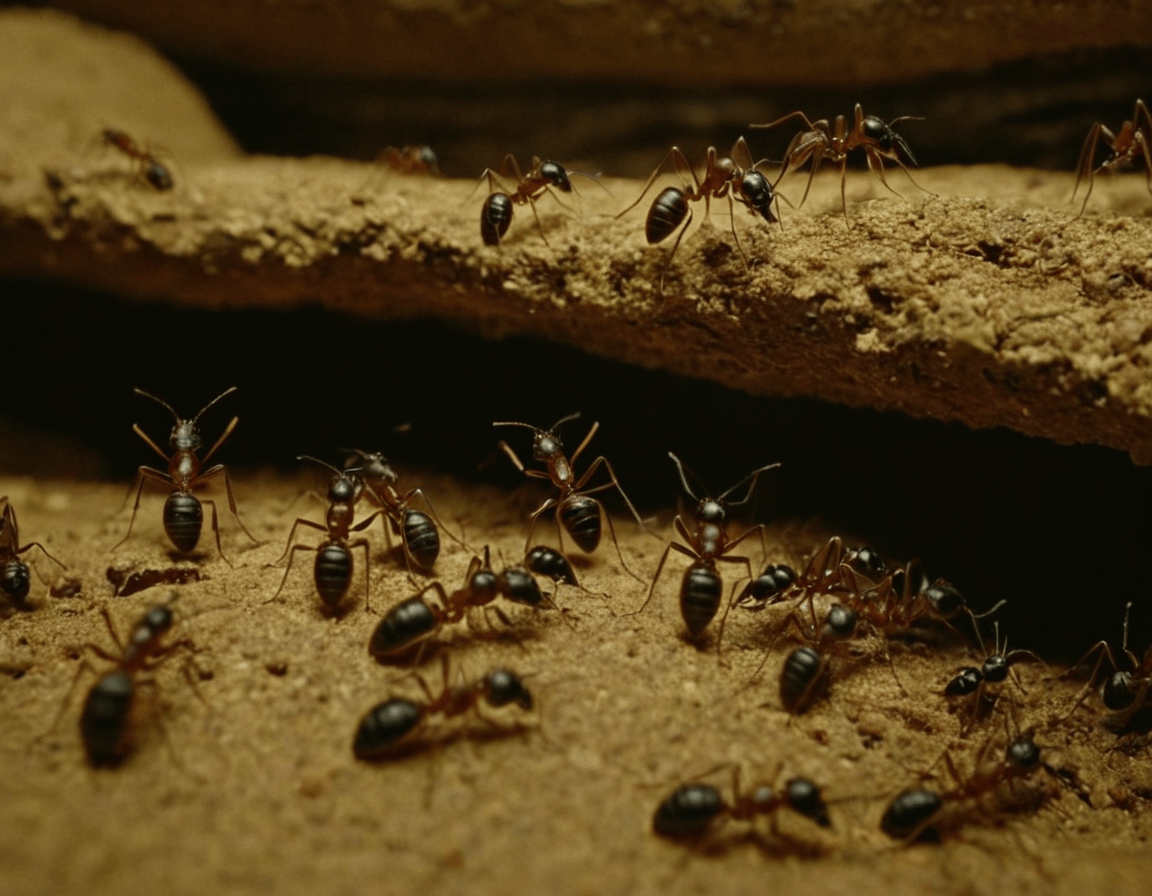
Ants live in highly organized colonies, where each individual plays a specific role for the well-being and survival of the entire community. Within the colony, there are workers tasked with obtaining food, soldiers defending the nest, and the queen responsible for reproduction and population growth. This division of labor is essential for the efficient functioning of the colony.
The Ecological Importance of Ants
Ants play a number of crucial roles in terrestrial ecosystems. As decomposers, they contribute to the breakdown of dead organic matter, facilitating nutrient recycling in the soil. Additionally, ants aerate the soil by digging underground galleries, improving air circulation and root penetration for plants. Some ant species also act as predators of harmful insects, contributing to the control of agricultural pests.
Interactions with Humans
Ants can have both positive and negative interactions with humans. While some ant species may infest homes and damage agricultural crops, others are used by humans in agriculture for biological control of insect infestations. Furthermore, ants are objects of scientific interest and inspiration for technological research, with studies seeking to mimic their self-organizing ability and cooperation to develop algorithms and artificial intelligence systems.
Curiosities about the World of Ants
There are over 12,000 species of ants described worldwide, with many more yet to be discovered.
Ants have managed to colonize nearly all terrestrial habitats, from the Arctic to the desert and from the rainforest to the city.
Some ant species can lift up to 50 times their body weight, making their lifting strength proportionally much greater than that of humans.
Conclusions
Ants are an important component of terrestrial ecosystems and a surprising example of social cooperation in the animal world. Their extraordinary social organization and fundamental ecological importance make them subjects of study and admiration by scientists and nature enthusiasts alike. Protecting ant habitats and gaining a better understanding of their role in ecosystems is essential for ensuring the well-being of the entire planet.