Willys Jeep: The Story of a Legend Forged in War
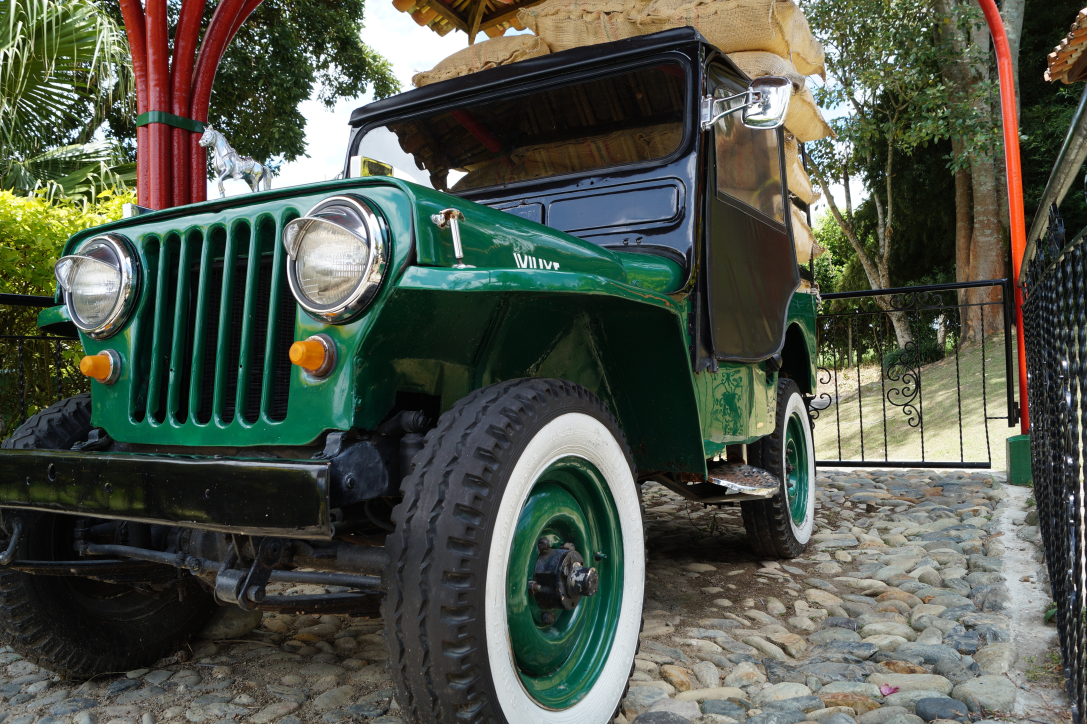
The Jeep is more than a vehicle—it is a global icon, a symbol of freedom, capability, and rugged individualism. Its story begins not in a showroom, but on the battlefields of World War II, born out of an urgent military necessity. The history of the Willys Jeep is a fascinating tale of innovation, industrial might, and how a simple, rugged machine became a timeless hero.
The Birth of an Icon
In June 1940, with World War II raging in Europe and the threat of global conflict looming, the U.S. Army issued a desperate call to 135 automakers . They needed a lightweight, durable, and highly capable "light reconnaissance vehicle" to transport personnel and equipment across the most challenging terrain . The specifications were demanding: the vehicle needed to be four-wheel drive, have a payload of 600 pounds, and weigh no more than 1,300 pounds.
Only three companies responded to the Army's ambitious call: American Bantam, Ford, and the Willys-Overland Company of Toledo, Ohio . The initial contract was awarded to Bantam, which delivered the first prototype. However, both Ford and Willys were also developing their own versions, with Willys-Overland completing their prototype, the "Quad," in an astonishing 75 days . The Quad was named for its 4x4 system, a feature that would become the Jeep's defining characteristic .
After rigorous testing, the U.S. Army ultimately selected the Willys design. However, it was a hybrid of the best elements from all three designs. The Army standardized the design, and in July 1941, Willys-Overland was awarded the contract to mass-produce the new vehicle, designated the Willys MB . More than 368,000 Willys MBs were built during the war, while Ford produced another 277,000 under license . These olive-drab vehicles became an inseparable part of the war effort, earning the name "Jeep" .
The Origin of the Name
The origin of the name "Jeep" is part of the vehicle's rich folklore. The most widely accepted theory is that it comes from a phonetic slurring of the letters "GP," an abbreviation for "General Purpose" . Another popular theory suggests the name was inspired by "Eugene the Jeep," a mischievous and resourceful creature from the Popeye comic strip, known for its ability to solve seemingly impossible problems—a fitting description for the vehicle's remarkable capabilities .
The Legend in Combat
The Willys MB quickly proved its worth on the battlefield. General Dwight D. Eisenhower, the Supreme Allied Commander, later described the Jeep as one of the most vital pieces of equipment for the Allied victory, alongside the bulldozer, the 2½-ton truck, and the C-47 airplane .
The vehicle was astonishingly versatile. It served as a troop carrier, a reconnaissance vehicle, a gun mount for machine guns, and a makeshift field ambulance for the wounded . It could be modified for a wide range of tasks, from laying telephone cables to plowing snow. One Jeep was even awarded a Purple Heart for its service and sent home . In the words of war correspondent Ernie Pyle, it did everything, went everywhere, and was "as faithful as a dog, as strong as a mule, and as agile as a goat" .
One of the key elements of the MB's success was its simple yet powerful "Go-Devil" engine, a 2.2-liter inline-four producing 60 horsepower . It was also incredibly light, weighing just over 2,000 pounds, which allowed it to be transported by aircraft and even fit into the large gliders used during the D-Day invasion of Europe . Its role in major operations was immense, including the Allied landings in Sicily and Italy, where thousands of Jeeps served in every conceivable role .
The Legacy: From War to Peace
When the war ended, the Willys MB faced an uncertain future. However, its extraordinary reputation ensured its survival. Willys-Overland recognized the vehicle's potential for civilian life, particularly in agriculture and industry . The military workhorse was transformed into a civilian workhorse, the CJ-2A (Civilian Jeep), in 1945 .
This new vehicle was marketed to farmers, who could use it to replace a pair of heavy draft horses, and to industry as a "Powerhouse on Wheels" . The CJ-2A featured improvements for comfort and practicality, such as a tailgate, a stronger clutch, and better suspension, yet it retained the ruggedness that had made the MB so successful . Around 215,000 CJ-2As were built from 1945 to 1949, proving the enduring appeal of the all-purpose 4x4 .
The success of the Jeep established Willys-Overland as the undisputed leader in 4x4 technology, a legacy that continues to this day. The company expanded its lineup with the all-steel Willys Wagon and the Willys Pickup, further diversifying the brand . The Jeep had not only helped win a war but had also laid the foundation for a new era of off-road vehicles and a global automotive icon. Its story is one of ingenuity, perseverance, and the creation of a legend.