The Classification of Engines: Types and Characteristics
Introduction
Engines are the heart of numerous devices and vehicles, from automobiles to industrial machines, household appliances, and airplanes. Classifying engines is a fundamental process to understand their different applications, functioning, and technical characteristics. This article explores the main criteria for classifying engines, illustrating various types and their specific applications.
Classification of Engines by Fuel Type
Internal Combustion Engines (ICE):
Gasoline Engines: These use gasoline as fuel and are known for their quick response and high performance. They are commonly used in cars, motorcycles, and some small vehicles.
Diesel Engines: These use diesel fuel and are valued for their energy efficiency and high torque. They are widely employed in trucks, buses, agricultural machinery, and commercial vehicles.
Natural Gas Engines: These run on methane or LPG (liquefied petroleum gas) and are known for their low emissions. They are used in some light vehicles and public transportation.
Electric Motors:
Direct Current (DC) Motors: These motors use direct current to operate and are often used in applications that require precise speed control, such as electric vehicles and household appliances.
Alternating Current (AC) Motors: These use alternating current and are divided into further categories such as asynchronous (induction) and synchronous motors. They are widely employed in industrial applications, HVAC, and household appliances.
Hybrid Motors:
Series Hybrids: The internal combustion engine generates electricity that powers the electric motor, which moves the wheels. This type is often used in urban driving vehicles.
Parallel Hybrids: Both the internal combustion engine and the electric motor can drive the vehicle’s wheels. This system is common in hybrid vehicles like the Toyota Prius.
Plug-In Hybrids (PHEV): Similar to parallel hybrids, but with a larger battery that can be recharged via an electric outlet.
Fuel Cell Engines:
Hydrogen: These use hydrogen to generate electricity through fuel cells, emitting only water vapor as a byproduct. They are considered a promising solution for zero-emission mobility.
Classification of Engines by Movement Type
Linear Motors:
Description: These convert energy into linear motion instead of rotary motion. They are used in applications such as linear actuators and magnetic levitation (maglev) trains.
Applications: Elevators, industrial handling systems, and advanced transportation.
Rotary Motors:
Description: These convert energy into rotary motion. This category includes most engines used in vehicles and industrial machinery.
Subcategories:
Internal Combustion Engines: Include piston engines, such as gasoline and diesel engines.
Turbine Engines: Used primarily in aerospace and industrial applications.
Classification of Engines by Work Cycle
Otto Cycle Engines:
Description: Used mainly in gasoline engines, the Otto cycle involves four stages: intake, compression, combustion, and exhaust.
Applications: Automobiles, motorcycles, and small engine tools.
Diesel Cycle Engines:
Description: Similar to the Otto cycle but with differences in the ignition phase, where the fuel is compressed until it spontaneously ignites.
Applications: Heavy vehicles, agricultural equipment, and some power generators.
Atkinson Cycle Engines:
Description: A modified thermodynamic cycle that improves fuel efficiency. Often used in hybrid engines.
Applications: Hybrid vehicles, such as the Toyota Prius.
Classification of Engines by Structure and Configuration
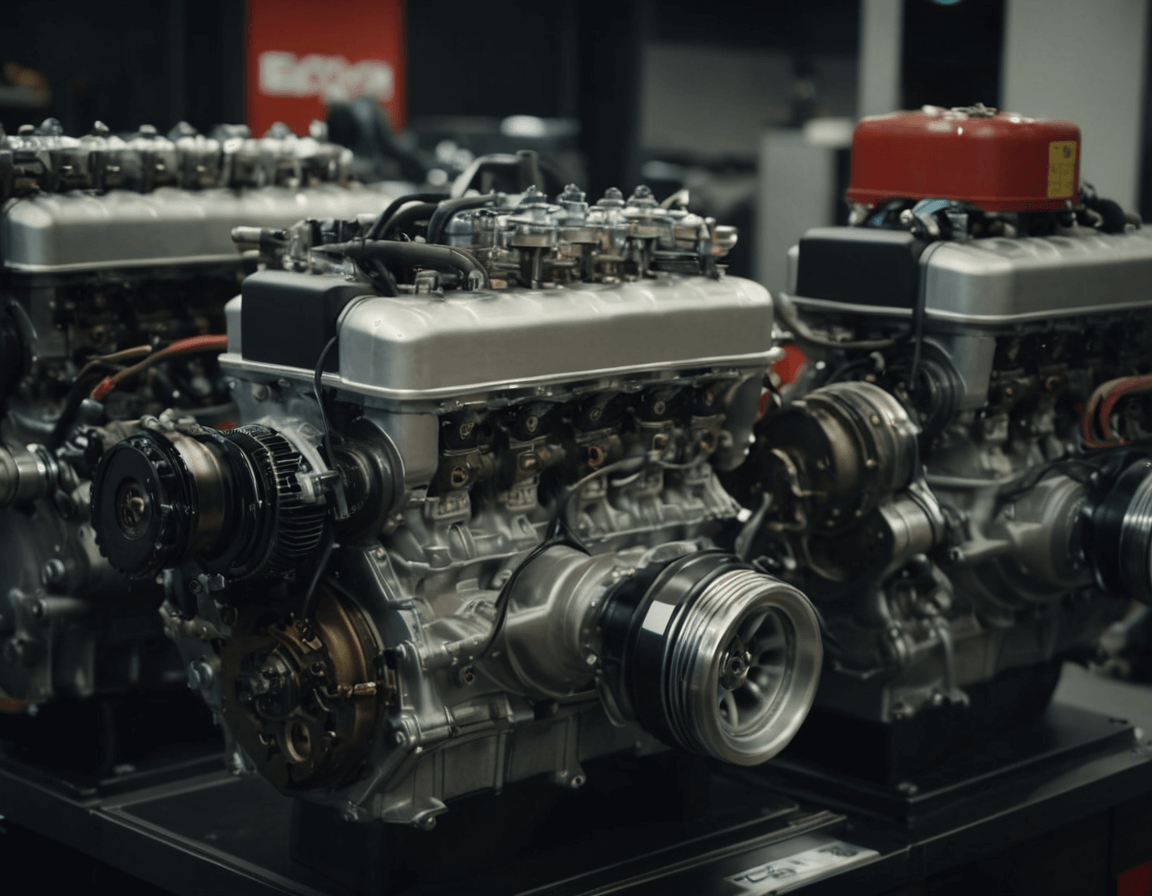
Piston Engines:
Description: These use pistons moving within cylinders to convert fuel energy into mechanical work.
Configurations:
Inline: Cylinders are arranged in a single line. Common in car engines.
V-Type: Cylinders are arranged in a V shape. Used in high-performance engines.
Boxer: Cylinders are horizontally opposed. Used in some sports vehicles and motorcycles.
Rotary (Wankel) Engines:
Description: These use a triangular rotor that rotates within an oval chamber, offering a compact design and a high power-to-weight ratio.
Applications: Sports cars and some experimental vehicles.
Classification of Engines by Energy Source
Thermal Engines:
Description: These convert thermal energy from fuel into mechanical energy. Include internal combustion and turbine engines.
Applications: Automobiles, airplanes, ships, and power generators.
Electric Motors:
Description: These use electrical energy to produce mechanical motion.
Types:
Induction Motors: Used in many industrial applications for their robustness and efficiency.
Direct Current Motors: Used in applications requiring precise speed control.
Conclusion
Classifying engines is essential to understand their characteristics and specific applications. From internal combustion engines to electric motors, linear to rotary configurations, each engine type offers unique advantages and addresses different needs. With the continuous evolution of technologies, understanding these classifications becomes increasingly important to fully exploit the potential of engines in a wide range of applications.