Mosaics: Art and History of an Ancient Tradition
Introduction
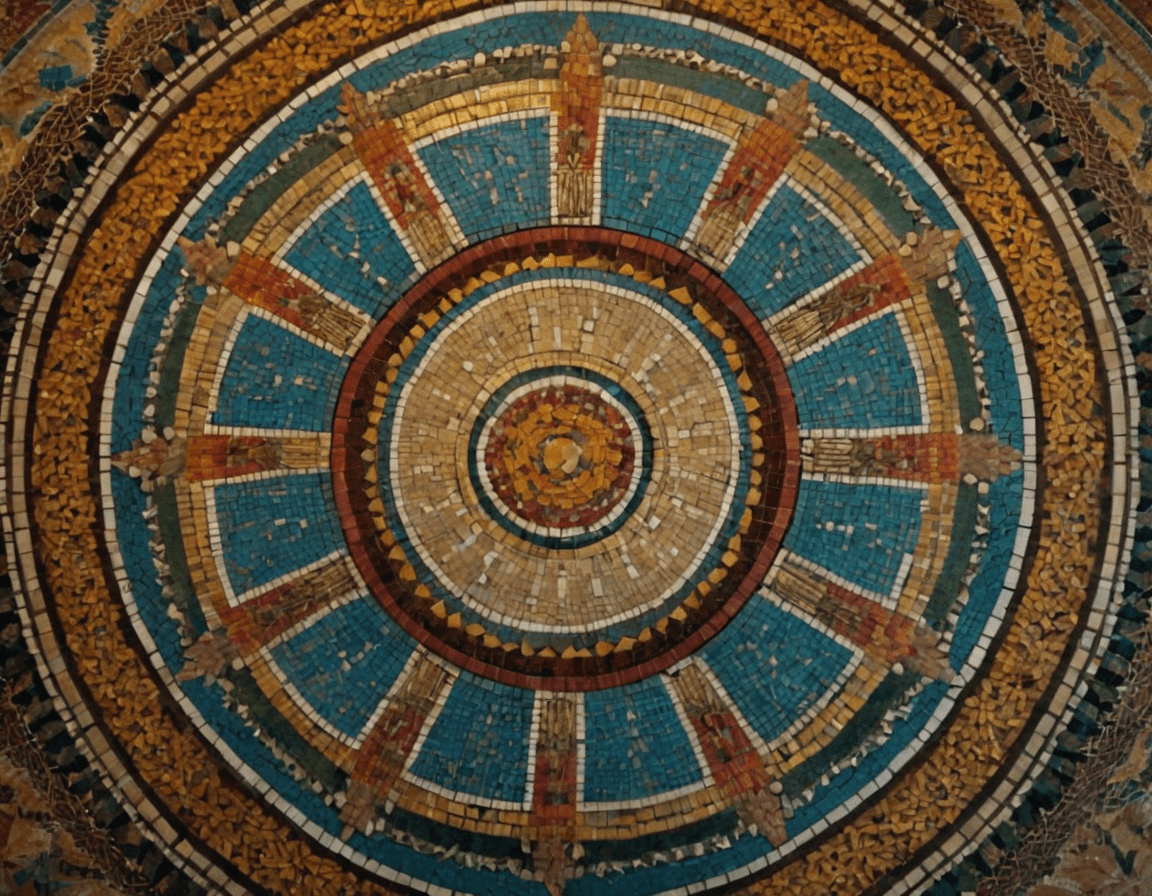
Mosaic is an ancient art form that has traversed centuries and civilizations, retaining its charm and ability to tell stories through colors and shapes. From the ancient Mesopotamian and Greek civilizations, through the Roman Empire and the Byzantine period, to modern interpretations, mosaics have decorated public and private buildings, temples, churches, and palaces, representing mythological, religious, and everyday scenes. This article explores the history, techniques, and cultural importance of mosaics, offering an in-depth look at this extraordinary art form.
Origins and History
Ancient Mesopotamia and Greece:
Origins: The earliest examples of mosaics date back to Mesopotamia, where colored clay cones were used to decorate columns and walls. In Greece, mosaics began to take shape in the 5th century BC, using pebbles to create geometric patterns and stylized figures.
Development: Over time, the Greek technique evolved, incorporating marble and colored glass tesserae to increase the complexity and brilliance of the works.
Roman Empire:
Expansion: The Romans perfected the art of mosaics, using them to decorate floors and walls of villas, public baths, and religious buildings. Roman mosaics often depicted scenes of everyday life, mythology, and nature.
Technique: The Roman technique included the use of tesserae of various sizes and materials, such as marble, limestone, terracotta, and glass, arranged on a mortar base.
Byzantine Period:
Refinement: Mosaic art reached its peak during the Byzantine Empire. Byzantine mosaics were characterized by extensive use of gold and colored glass tesserae, creating extraordinary effects of light and depth.
Religious Themes: These mosaics decorated churches and primarily depicted religious scenes with rich and symbolic iconography. Famous examples include the mosaics of the Basilica of San Vitale in Ravenna and those of Hagia Sophia in Istanbul.
Techniques of Creation
Surface Preparation:
Base: The surface on which the mosaic will be applied must be carefully prepared, often using a layer of mortar or cement to ensure the stability of the tesserae.
Drawing: A preliminary drawing is traced on the base to guide the placement of the tesserae.
Selection and Cutting of Tesserae:
Materials: Tesserae can be made from various materials, including stone, glass, ceramics, and shells. Each material offers a unique range of colors and textures.
Cutting: The tesserae are cut into small, regular or irregular pieces, depending on the desired effect. This process requires precision and skill.
Placement of Tesserae:
Arrangement: The tesserae are placed one by one on the prepared base, following the preliminary drawing. A special adhesive or glue is used to fix them.
Finishing: Once the mosaic is completed, grout is applied between the tesserae to fill the spaces and stabilize the work. After drying, the surface is cleaned and smoothed.
Cultural Importance and Modern Interpretation
Historical Significance:
Documentation: Mosaics are important historical documents that provide information about the life, beliefs, and artistic practices of ancient civilizations.
Heritage: Many ancient mosaics have been preserved and restored, becoming part of the cultural heritage of humanity.
Contemporary Mosaics:
Reinterpretation: Contemporary artists continue to explore mosaic art, often reinterpreting it with modern materials and techniques. These new mosaics can be found in public and private spaces, integrating tradition and innovation.
Education and Craftsmanship: Mosaic workshops and art schools offer courses to keep this tradition alive, teaching both classical and modern techniques.
Conclusion
Mosaic is an art form that has traversed millennia, continuously renewing itself and always retaining its ability to fascinate and tell stories. From the ancient world to the contemporary one, mosaics represent an invaluable artistic and cultural heritage. Exploring the history and techniques of mosaics not only allows us to better appreciate this art form but also to understand the civilizations that created it and its ongoing impact on modern art and culture.